Textbooks explain circuits.
We hand them over.
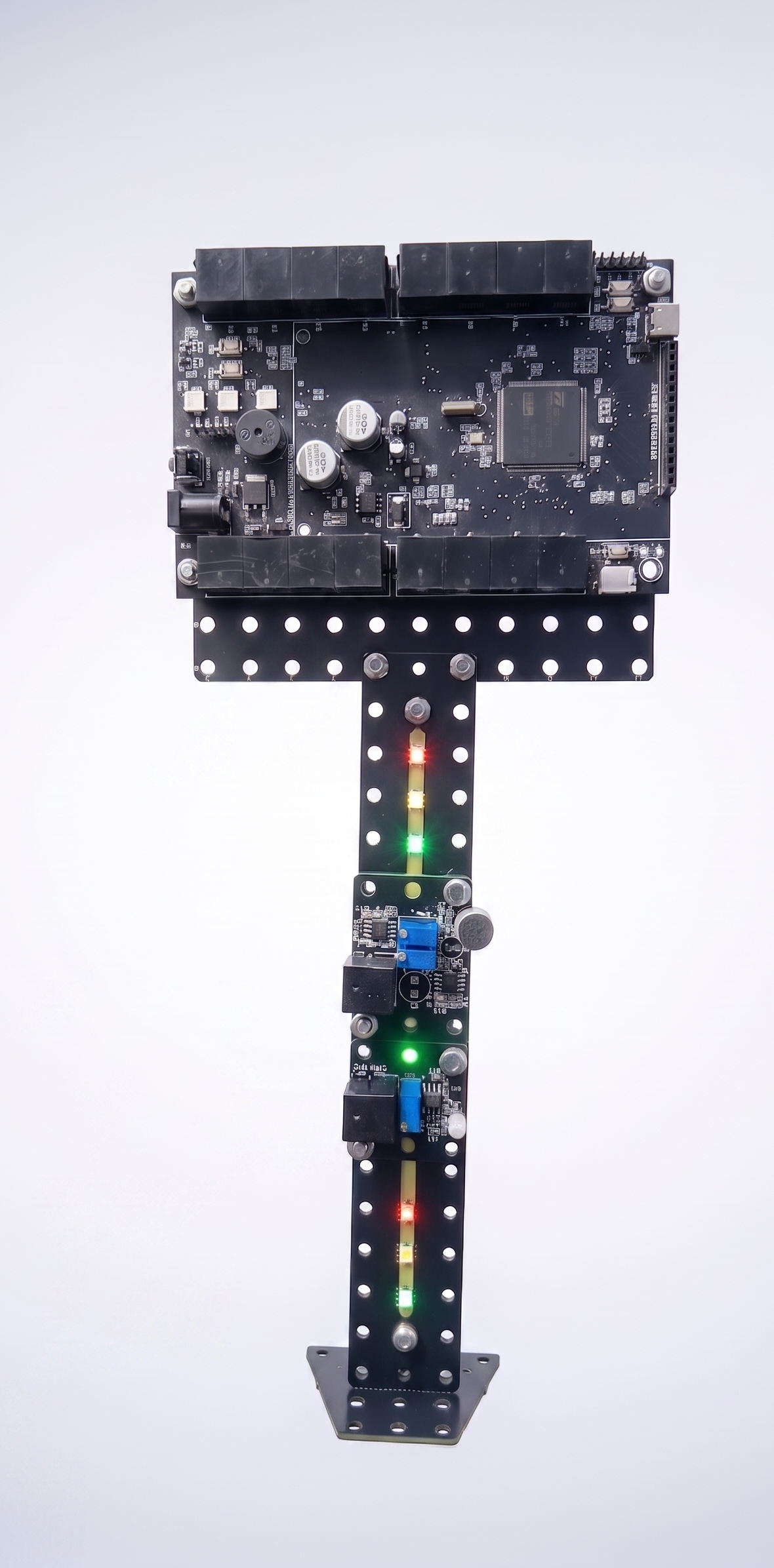
One board, 70+ sensors and 150+ build parts, wrapped in a curriculum we wrote ourselves. Projects climb a deliberate ladder — every concept returns a year later, harder, attached to a real-world problem. A child doesn't finish a kit. They finish a decade.
We don’t teach children about technology.
We put it in their
hands.
Curio Makerlabs is a Chennai-based team of engineers, educators and makers building hardware and curriculum together, from scratch, for pre-KG through 10th standard. Pre-launch, and deliberately so — we’d rather ship a board with a decade of projects behind it than a kit with nothing to teach with it.
The curriculum came first.
Seventy projects, Each one attaches to a real problem. We built the modules the projects demanded.
One system, twelve years
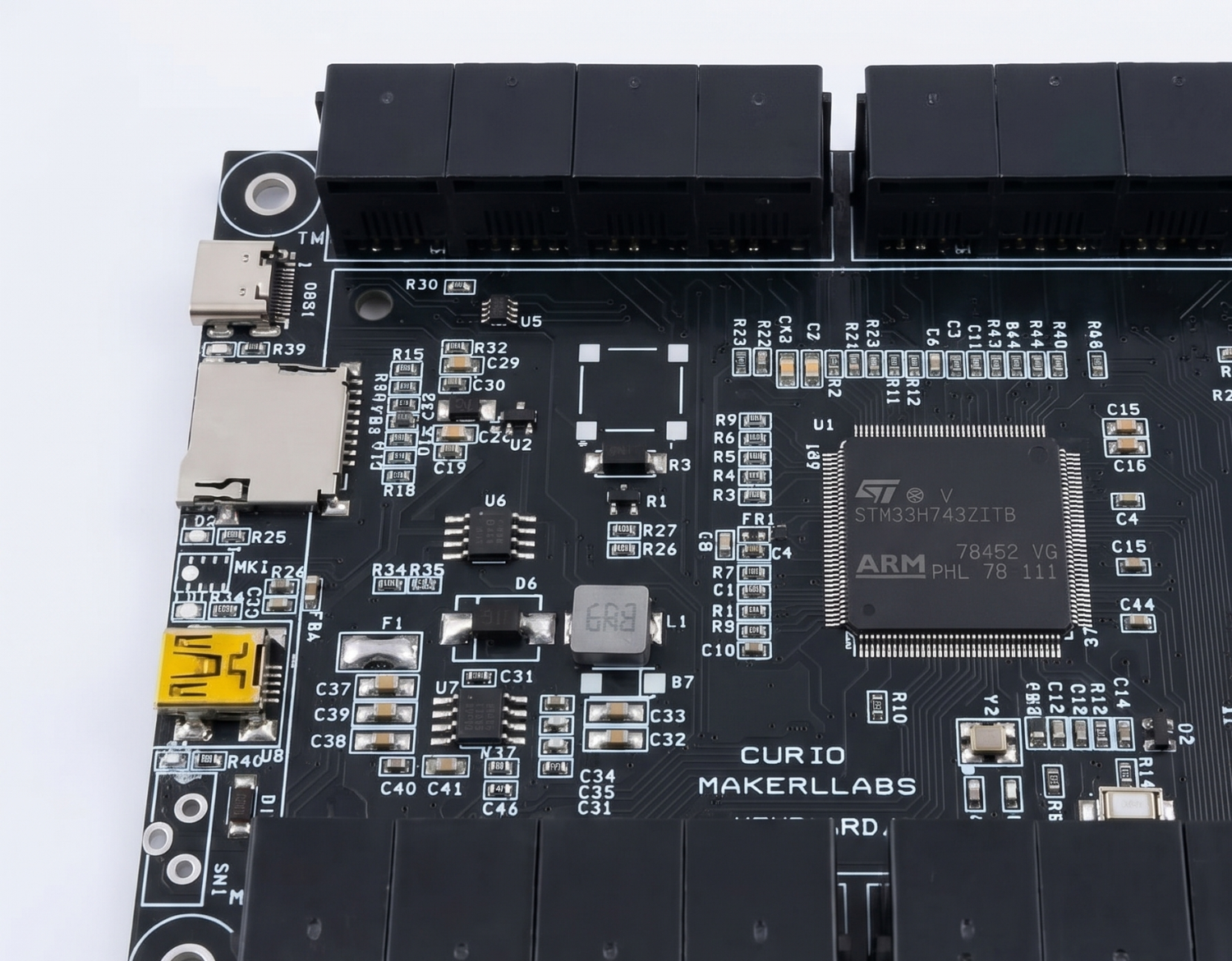
The board a UKG child taps at is the board a 10th-standard student programs. No restart, no throwaway toys.
Built for real classrooms
Keyed ports, housed modules, M3 bolts. Rated for forty pairs of hands a day and a teacher with no engineering degree.
Built different, on purpose.
Six decisions that separate a real classroom tool from a kit that ends up in a cupboard by October.
Curriculum first
Every module exists because one of seventy guided projects demanded it — not the other way round. The lesson plan always comes before the part.
One system, twelve years
The exact board a UKG child taps is the board a 10th-standard student programs. No restart, no throwaway toys along the way.
Zero wiring, zero risk
Keyed ports make reverse insertion physically impossible. Snap it in, and it’s wired correctly — every time, by a six-year-old.
Real AI, on real hardware
Kids collect their own photos, sounds and gestures and train a model that runs on their own board — not a slide about how AI works.
Built for forty hands a day
Housed modules and M3-bolted structures, rated for a full classroom cycling through it daily — not a fragile demo kit.
Designed and supported in India
Manufacturing, teacher training and curriculum support run out of Chennai — a two-day onboarding, not a manual left for a teacher to figure out alone.
Find it. Build it. Teach it. Prove it.
Our solution isn’t a single product — it’s a four-step method that repeats every year, always in this order, so a skill learned at seven still shows up at fifteen.
Pick a mission
Every build starts with something a kid actually cares about — a night-light that knows when it’s dark, a plant-waterer for the summer holidays, a doorbell for the treehouse. They scout, they pick, they plan. A kid who chose the mission can’t wait for the bell.
- They learn
- Spotting opportunities
- Asking why
- Planning
Snap it together
Modules click into keyed ports — no wiring, no soldering, no way to plug anything in wrong. Bolt a frame with real M3 hardware, drag a few blocks in Curio Studio, and it lights up, beeps and drives before the period ends. “I made that!” lands on day one.
- They learn
- Circuits
- Structures
- Block → text code
Give it a brain
The magic lap. Kids collect their own photos, sounds and gestures, then train a real AI model that runs on their own board. Wave hello — it waves back. Every training round makes the machine sharper, and its maker sharper still.
- They learn
- Collecting data
- Training AI
- Testing & tuning
Show it off
Demo day. The machine performs, the class cheers, and its maker explains exactly how it thinks — what they built, how it works, what’s next. Every project ends with a working build and a kid presenting like they own the stage.
- Storytelling
- Public speaking
- Confidence
- Fits the timetable
Four products.
One ecosystem.
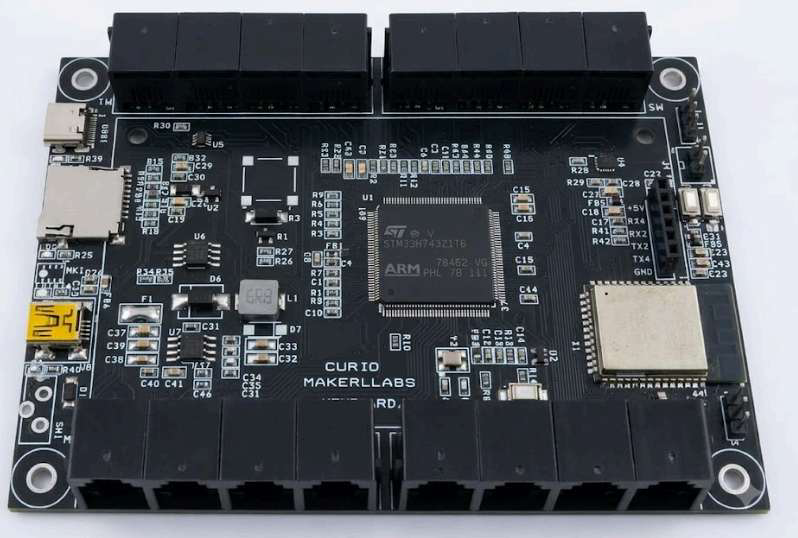
A single port standard runs through everything. What a child learns on one product carries directly into the next.
A student picks a problem worth solving, and builds the thing that solves it.
The innovator kit
Not a lesson about irrigation — an irrigation controller, built from 70+ sensor modules and 150+ structural parts, that reads the soil and decides when to open the valve. Not a chapter on air quality — a monitor that logs a classroom through a school day and shows what happened after lunch. The kit exists so that a student's answer to a real problem is a working machine, not a diagram.
Axon
Card-coded robotics
Coding you can hold, on a robot that keeps growing.
Lay out a row of cards, scan them, and the program runs. Bluetooth links Axon to Curio Lab, and a camera turns it into a robot that sees what’s in front of it.
- Physical card programming
- Bluetooth to Curio Lab
- Camera for vision projects
- Voice output
- Onboard sensing
Pip
Map-based robotics
A story on the floor, and a robot the child sends through it.
Pip travels a printed map — a village, a solar system, a food chain. The child plans the route, taps out the commands, and finds out whether the plan survives contact with the map.
- Map-based journeys
- Screenless, no login
- Colour and distance sensing
- Voice narration and story mode
Deck
Early literacy and numeracy
Touch a card, and Deck responds.
Challenge and quiz modes ask rather than tell, so the child works through it alone and knows straight away whether they were right.
- Challenge and quiz modes
- Record-your-own-voice prompts
- Any language spoken at home
- Screenless
Curio Studio
Blocks, with a 3D twin
Plug in a module and its 3D twin appears on screen — rotating, wired, reading live. Children see the sensor, the port and the code in one view, then flip from blocks to text when they’re ready.
Try it below ↓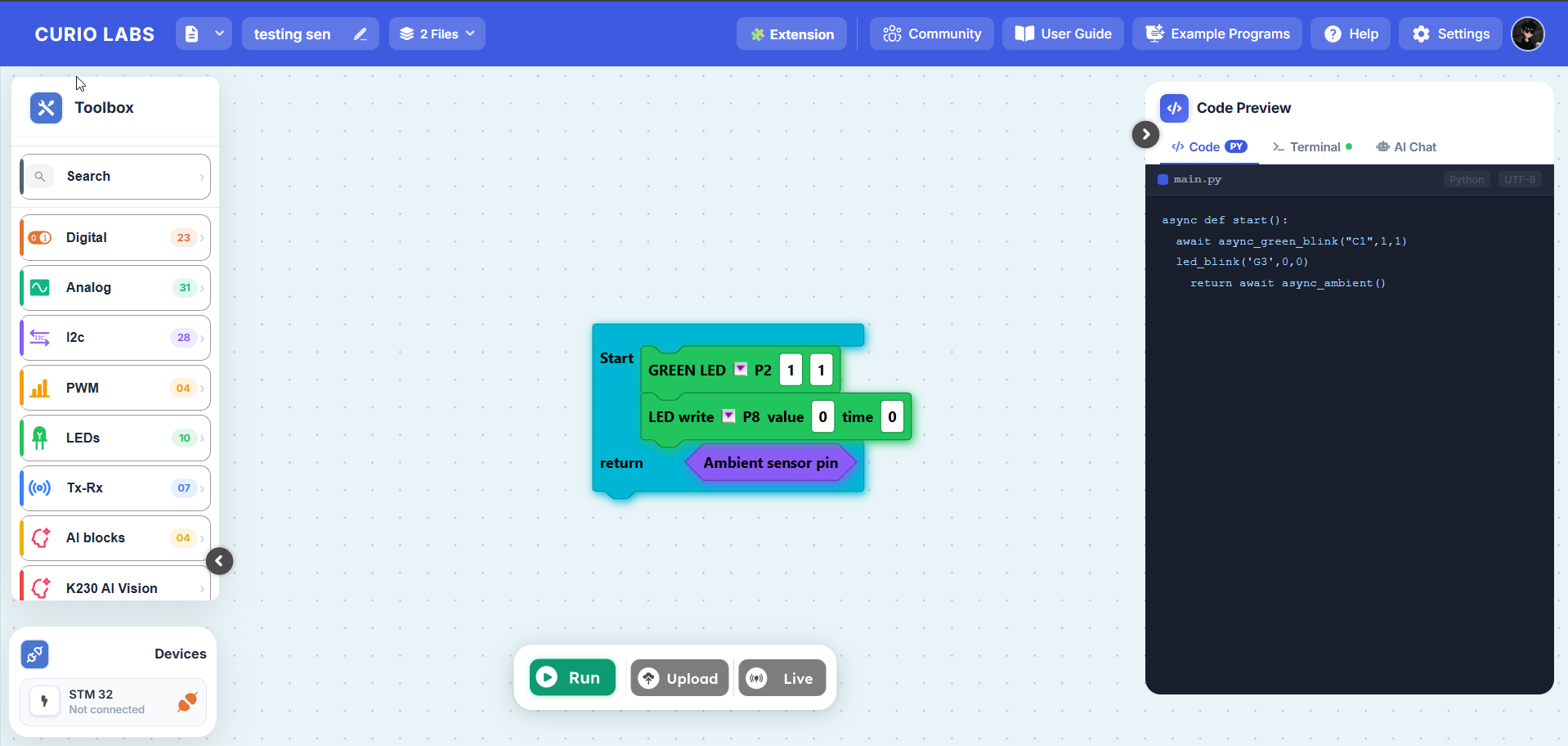
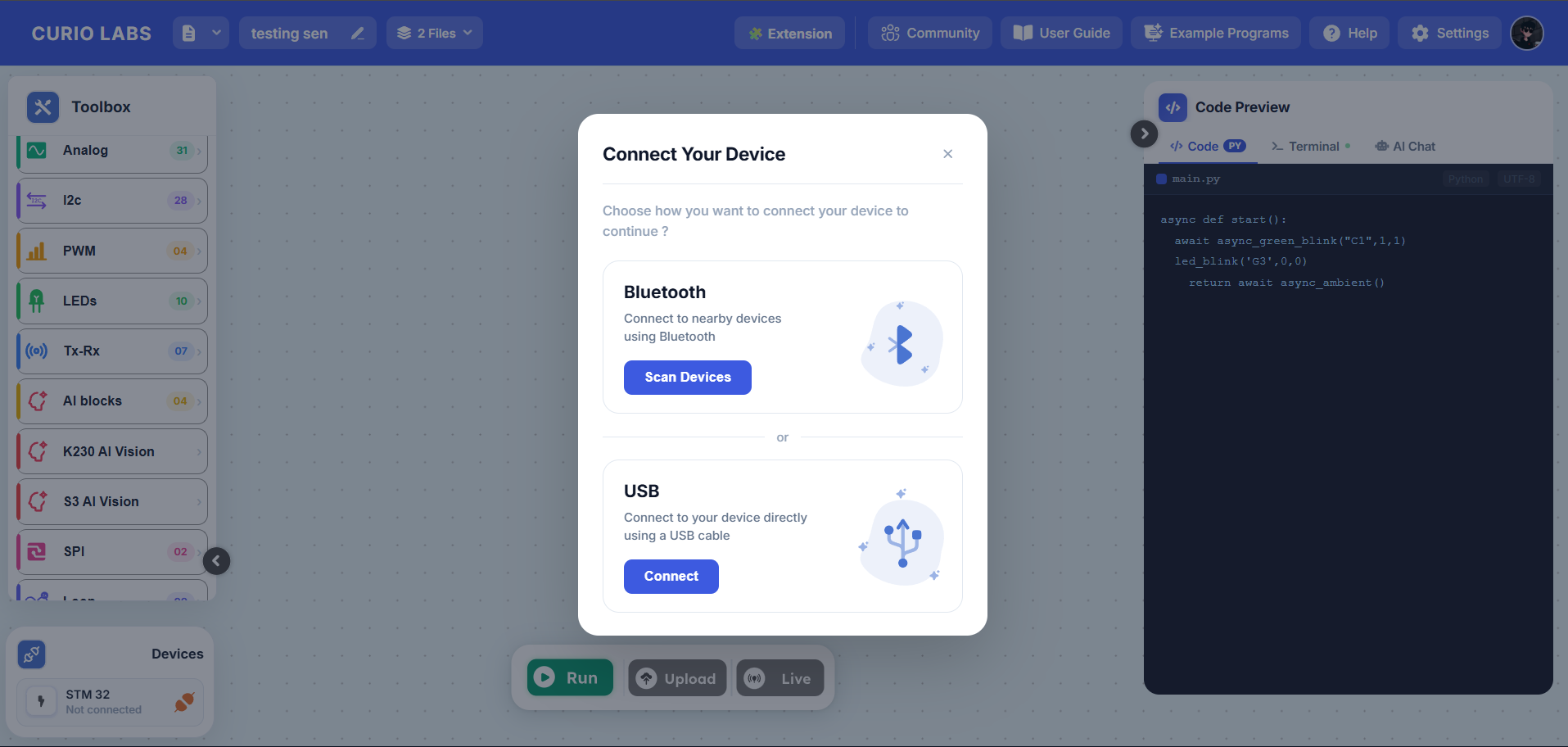
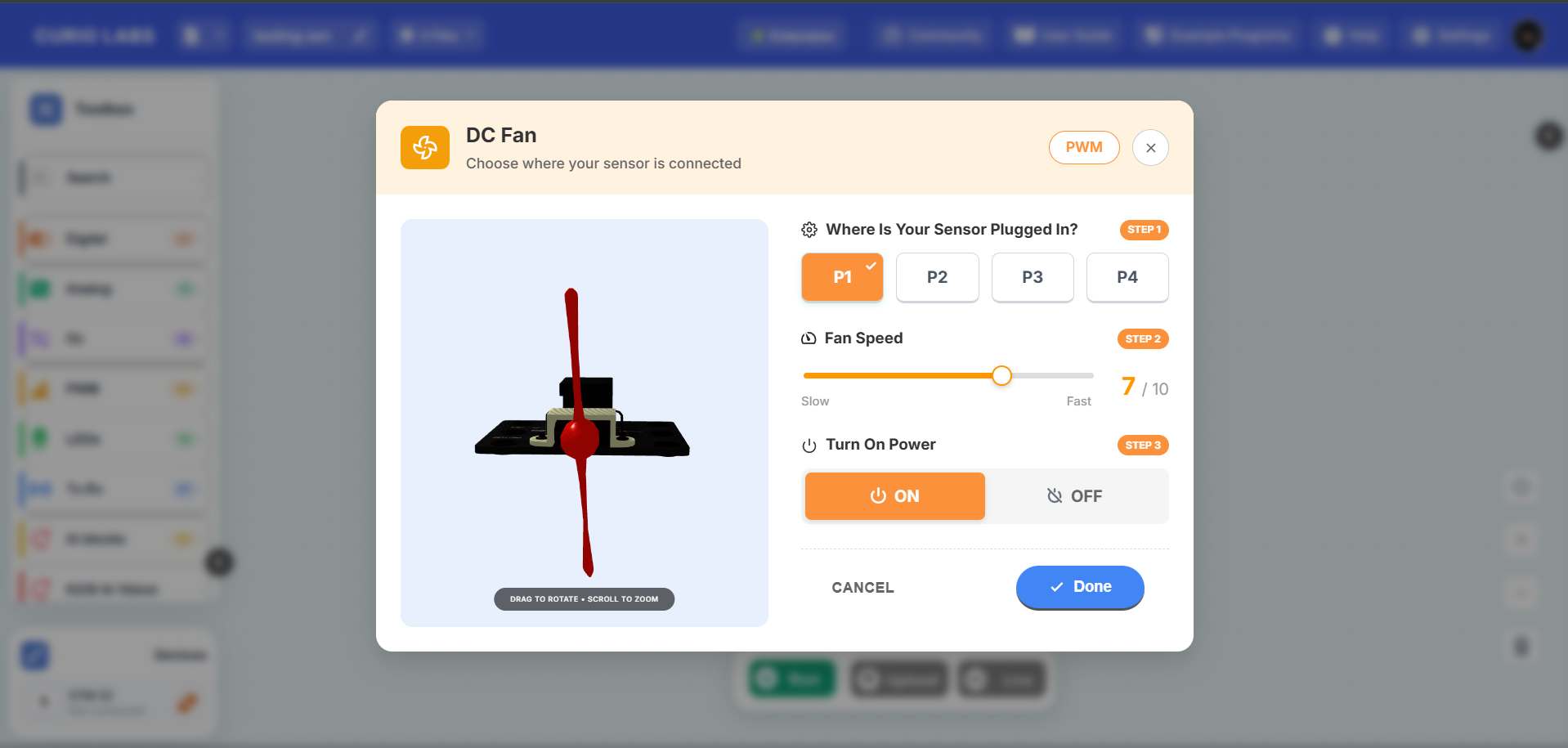
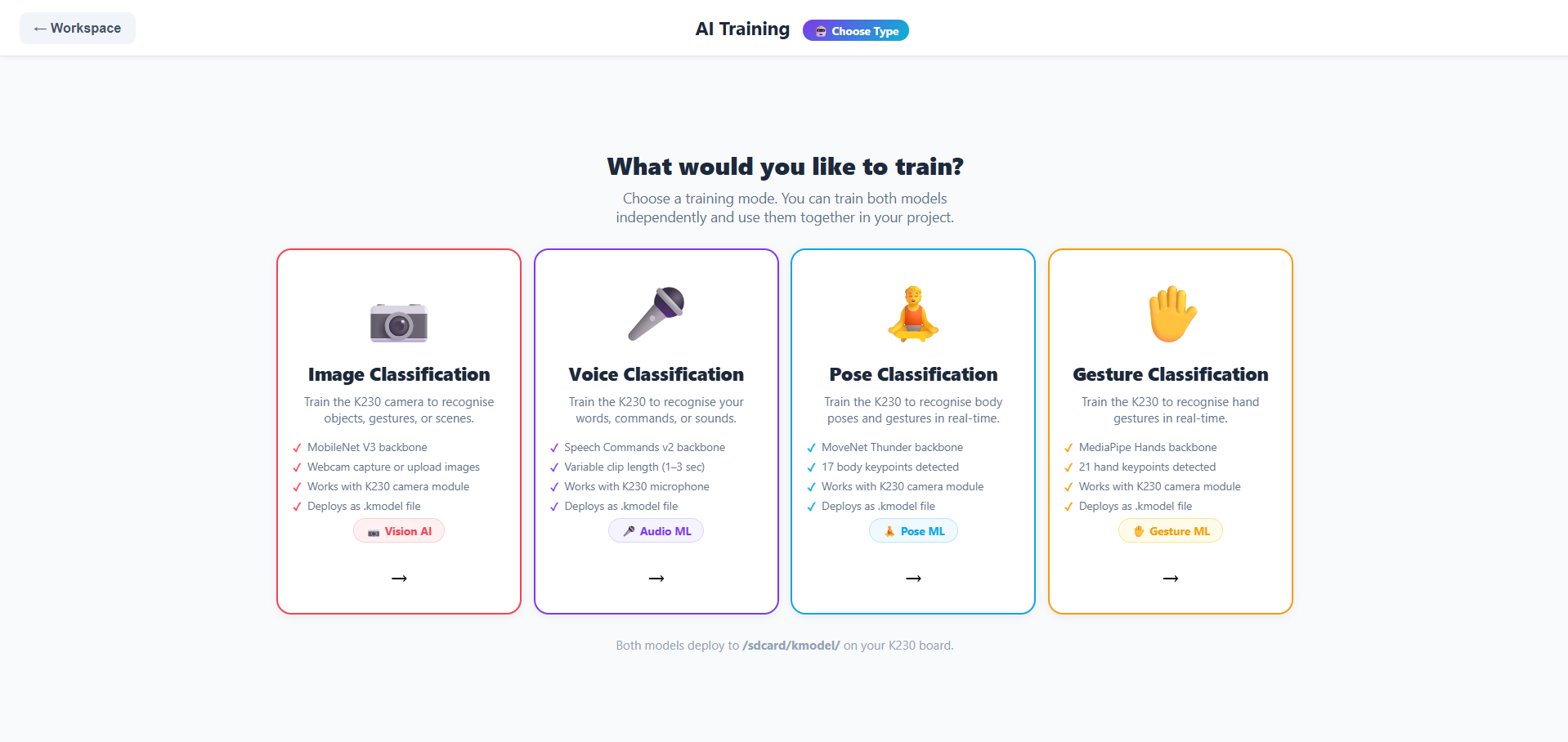
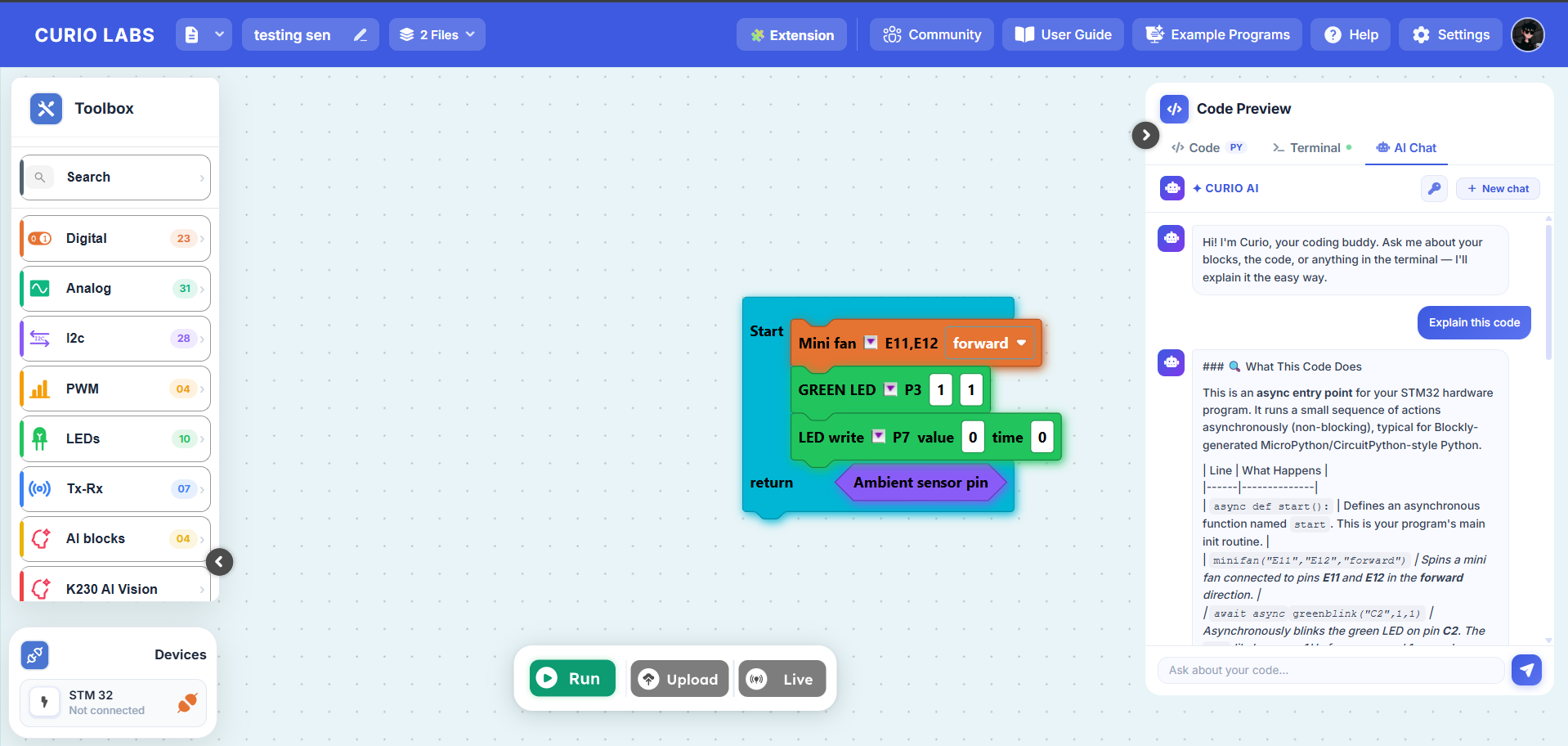
Plug something in.
A working slice of Curio Studio. Pick a module, choose a port, set the threshold — and watch the program a child would write respond to live readings.
Step 1 · module
Step 2 · port (1–8 of 16)
Step 3 · power
Step 4 · trigger threshold
Live reading · P2
Program · block view
Six blocks, no syntax. The same program flips to text with one toggle when a student is ready for it.
How we’re doing.
Pre-launch, and deliberately so. We are building hardware and curriculum in parallel rather than shipping a kit that has nothing to teach with it.
- Mainboard rev 4 — STM32H743, 16 keyed ports, hot-swap
- 70+ sensor modules designed and fabricated
- Structural build system, 150+ parts
- Curio Studio alpha with live 3D module view
- Axon chassis and closed-loop drivetrain
- Curriculum mapping, pre-KG to 10th
- Moulded module housings for classroom wear
- Teacher dashboard and lesson packs
- Pilot cohort — first ten schools
- Pip screenless robot, first working unit
- Curio Studio public beta
- Deck coding card reader
- Multi-state school rollout
What changed this month.
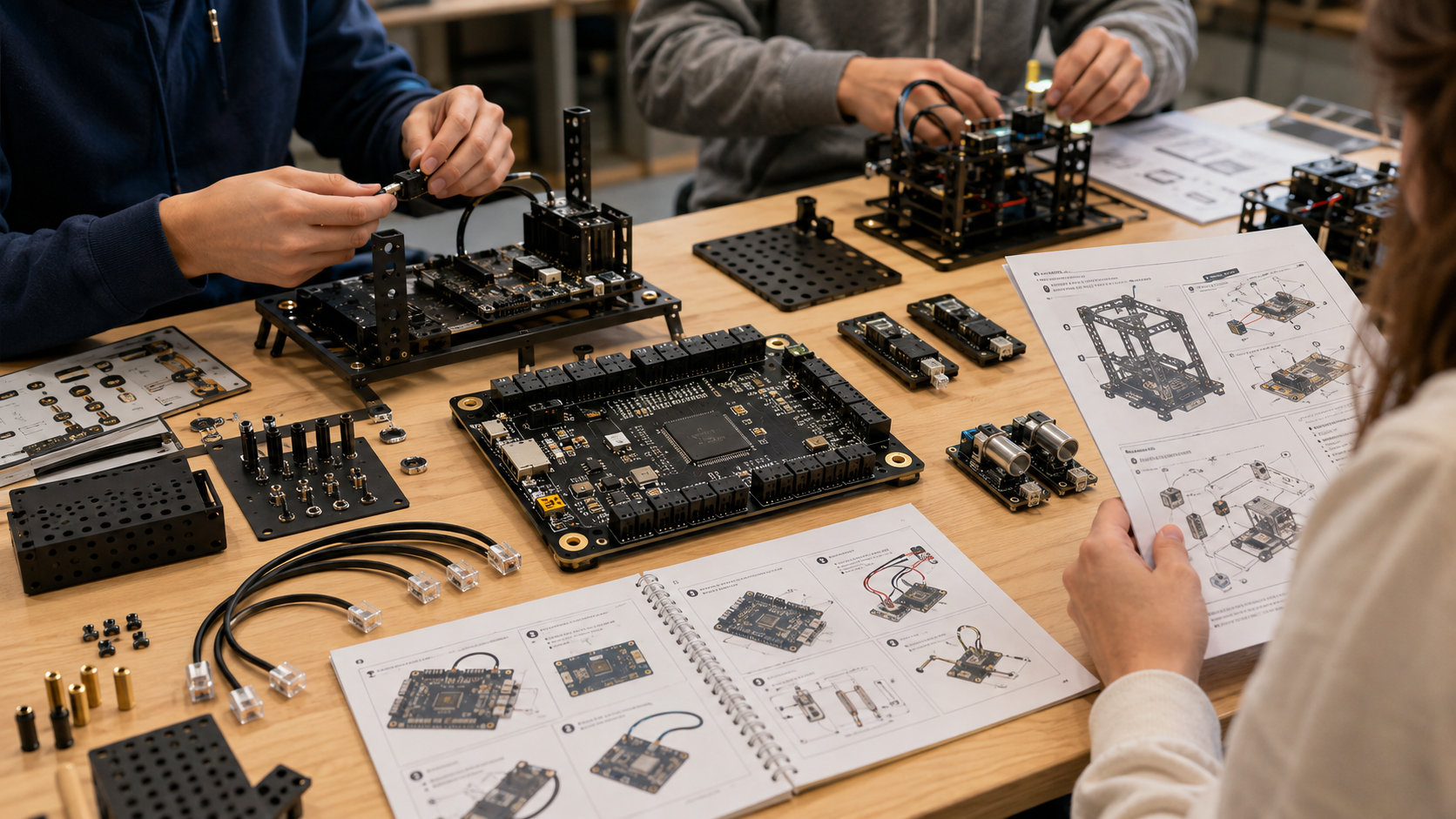
Product architecture is locked
Core hardware, software, modules and learning flow are defined — giving Curio one clear system to build, test and scale.
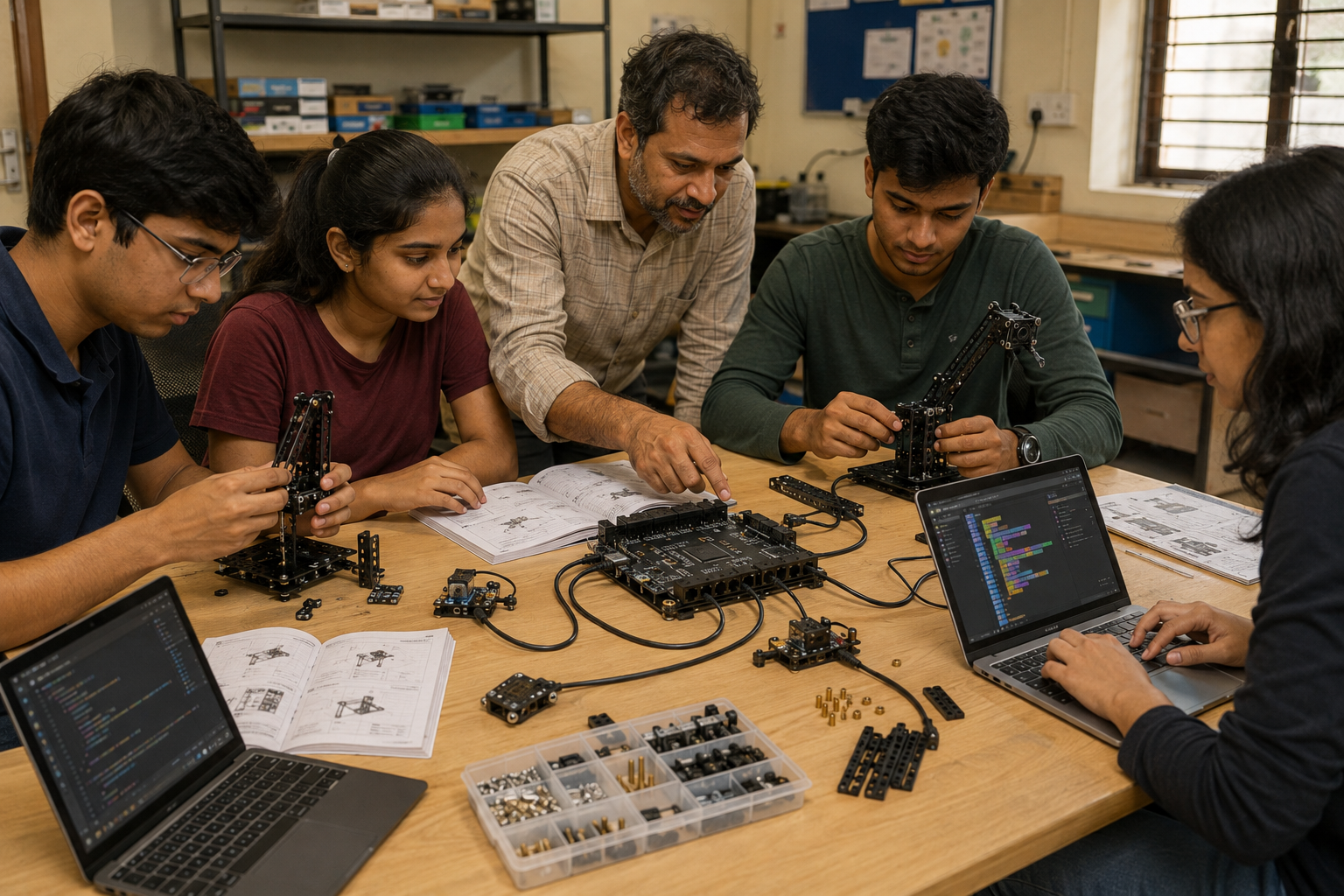
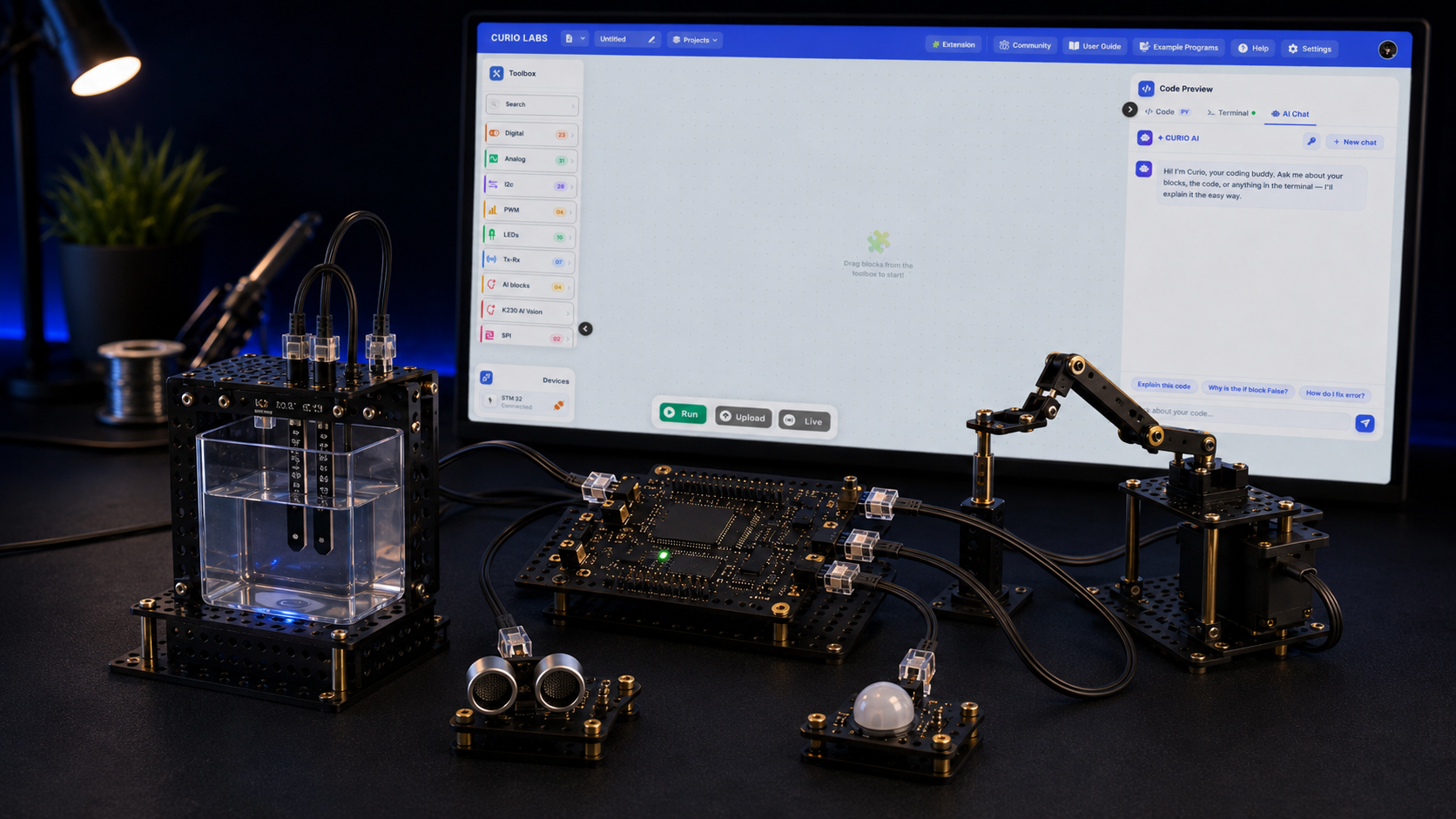
First integrated prototype comes alive
Boards, sensors, mechanics and Curio Studio work together for the first time — proving the complete build-to-code experience.
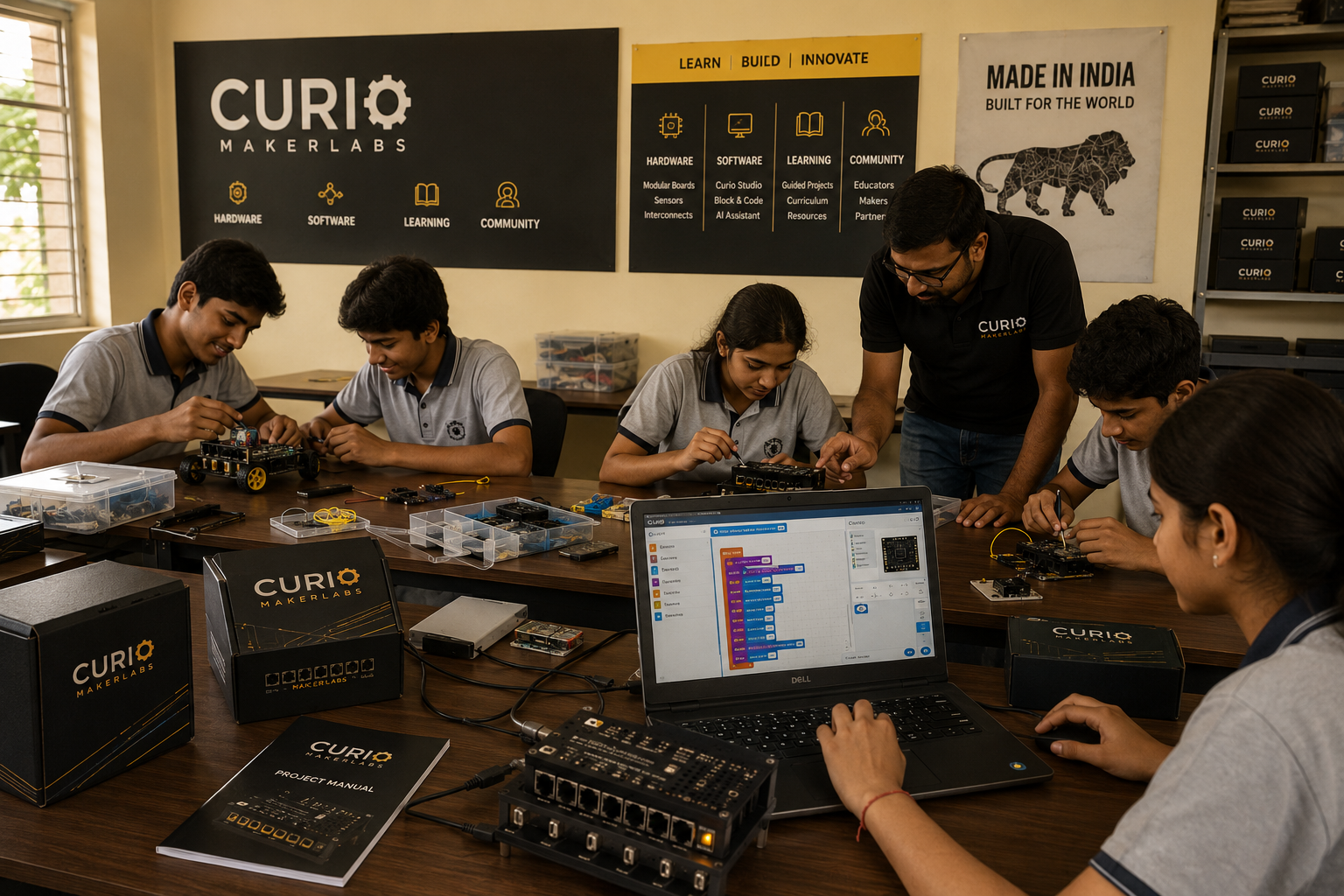
Pilot kits enter real testing
Early kits go through repeated project builds — refining wiring, mounting, firmware and instructions for a smoother classroom experience.
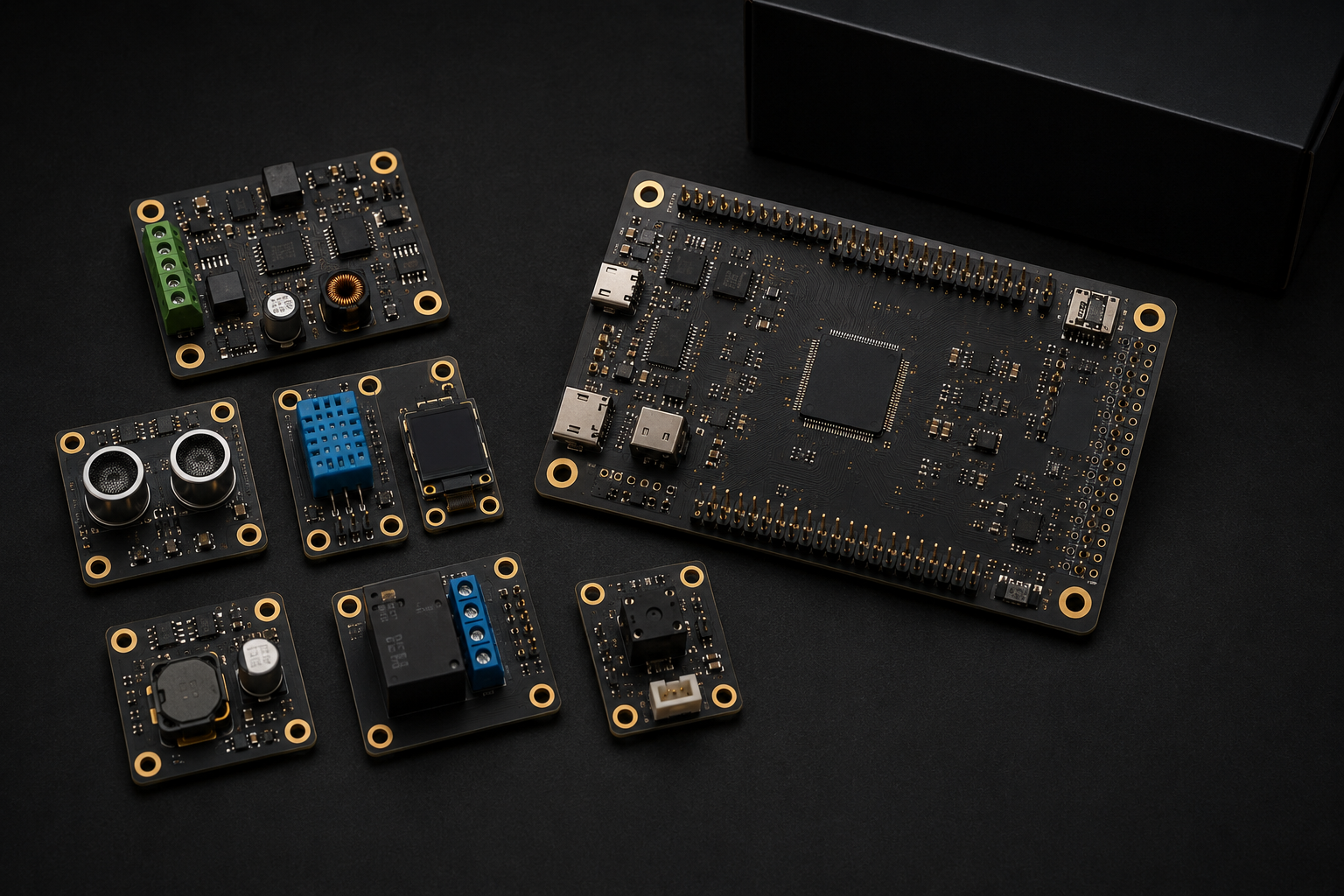
Platform reaches launch candidate
Final hardware revisions, module library and Curio Studio enter validation — with production, onboarding and reliability issues being closed.
Curio launches to the public
Curio MakerLabs opens to schools, educators and makers — bringing hardware, guided projects and Curio Studio together in one ecosystem.
-
Product architecture is locked
Core hardware, software, modules and learning flow are defined — giving Curio one clear system to build, test and scale.
-
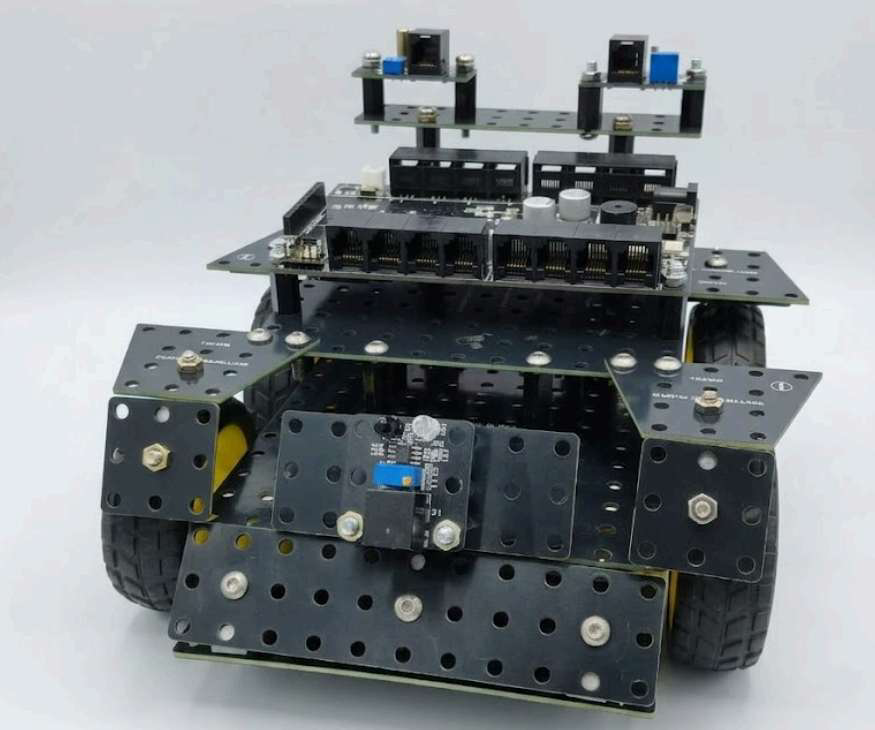
First integrated prototype comes alive
Boards, sensors, mechanics and Curio Studio work together for the first time — proving the complete build-to-code experience.
-
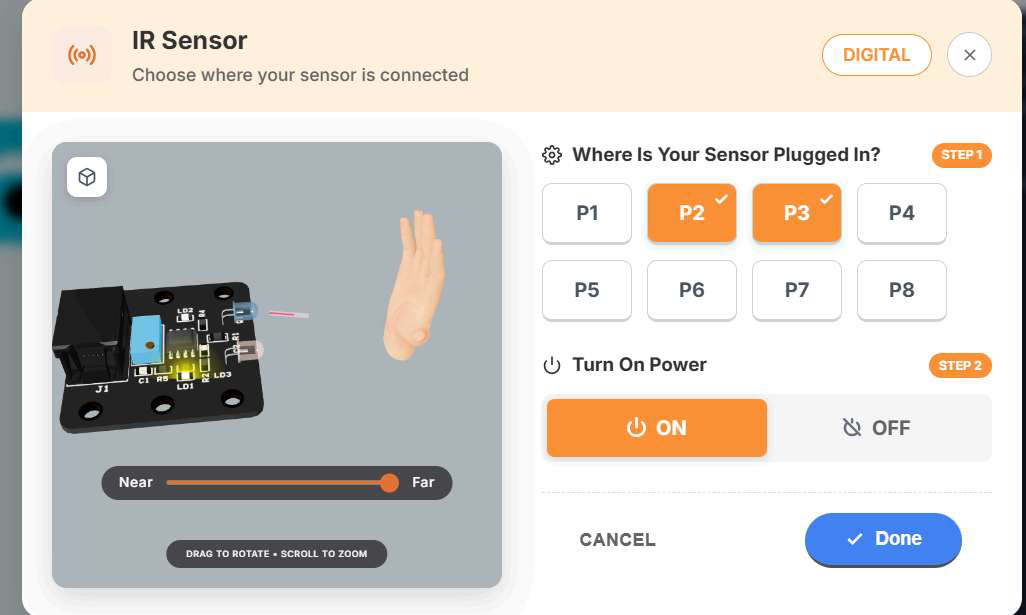
Pilot kits enter real testing
Early kits go through repeated project builds — refining wiring, mounting, firmware and instructions for a smoother classroom experience.
-
Platform reaches launch candidate
Final hardware revisions, module library and Curio Studio enter validation — with production, onboarding and reliability issues being closed.
-
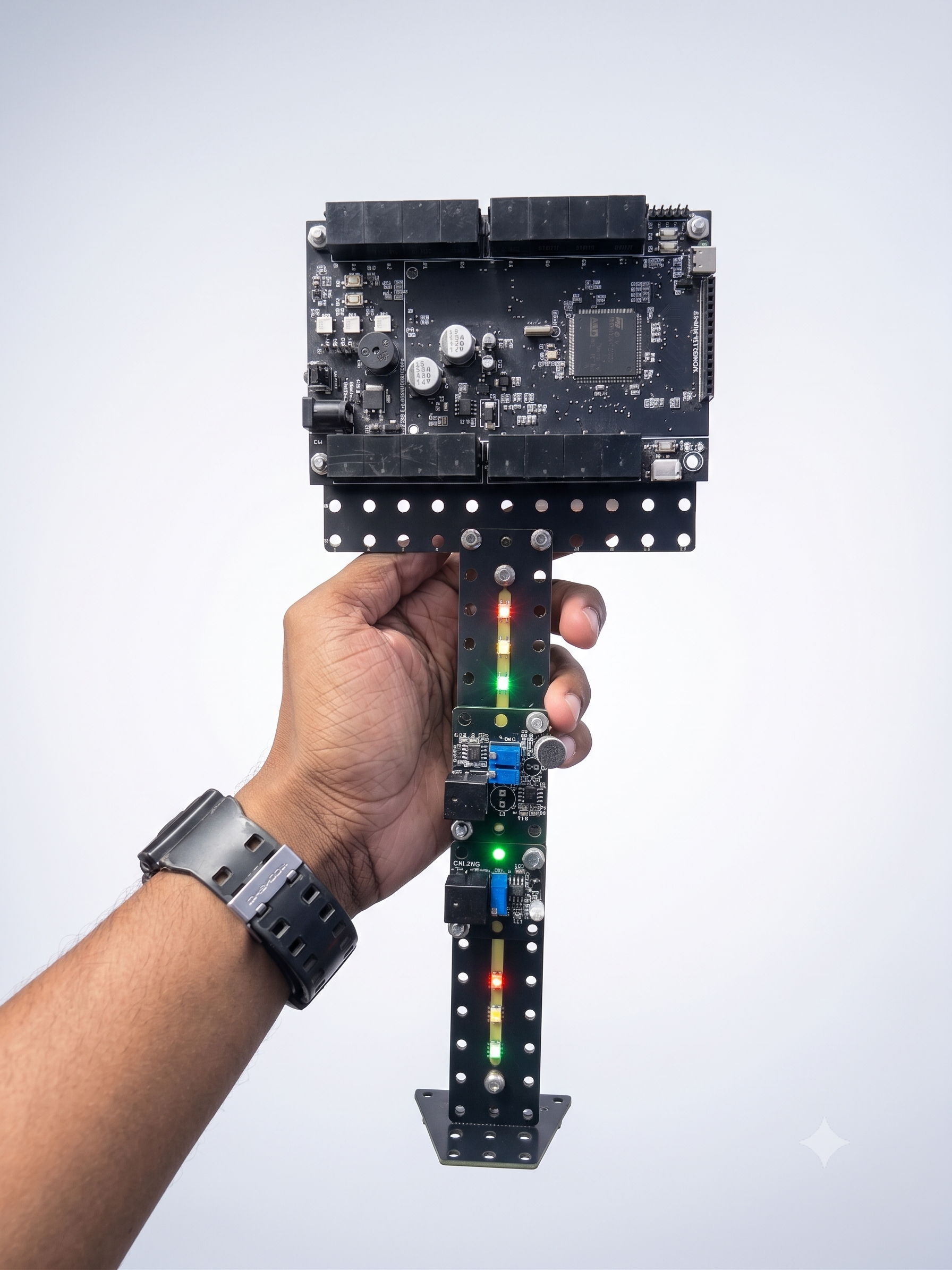
Curio launches to the public
Curio MakerLabs opens to schools, educators and makers — bringing hardware, guided projects and Curio Studio together in one ecosystem.
Questions schools ask us.
Is this a kit or a curriculum? +
Both, and that is the point. Schools get hardware, lesson plans, teacher training and software as one programme — so nothing ends up in a cupboard because nobody knew what to do with it.
What ages does it actually cover? +
Pre-KG through 10th standard. Pip and floor tiles for the youngest, Curio One with block coding through primary, Curio One plus Axon with text code for middle school. One port standard the whole way.
Do teachers need an engineering background? +
No. Modules self-identify, Studio shows a 3D twin of whatever is plugged in, and every project ships with a lesson plan, a materials list and the outcome a child should reach. Training is two days.
How rugged is it, really? +
Modules are housed and bolted rather than friction-fit, ports are keyed so reverse insertion is physically blocked, and the board survives shorted outputs. It is designed for forty pairs of hands a day.
When can a school actually get it? +
We are forming the pilot cohort now. Pilot schools get hardware, training and curriculum at cost, direct access to the engineers, and real influence over the product before general release.
What do you need from partners? +
Schools to pilot with, manufacturing partners in India who can hold tolerance at volume, and investors who understand that hardware timelines are measured in revisions, not sprints.
Partner with us
Build the first hundred classrooms with us.
We are looking for pilot schools, manufacturing partners, and investors who are patient with hardware. If any of those is you, we would rather talk early than pitch late.
Let’s talk.
Questions about a product, a pilot, or anything else — write in and we will get back within a couple of days.
Send a message
No. 10/15, 3rd Floor, MMH Complex, Natesan Street, Postal Colony, Thyagaraya Nagar, Chennai, Tamil Nadu, India — 600017